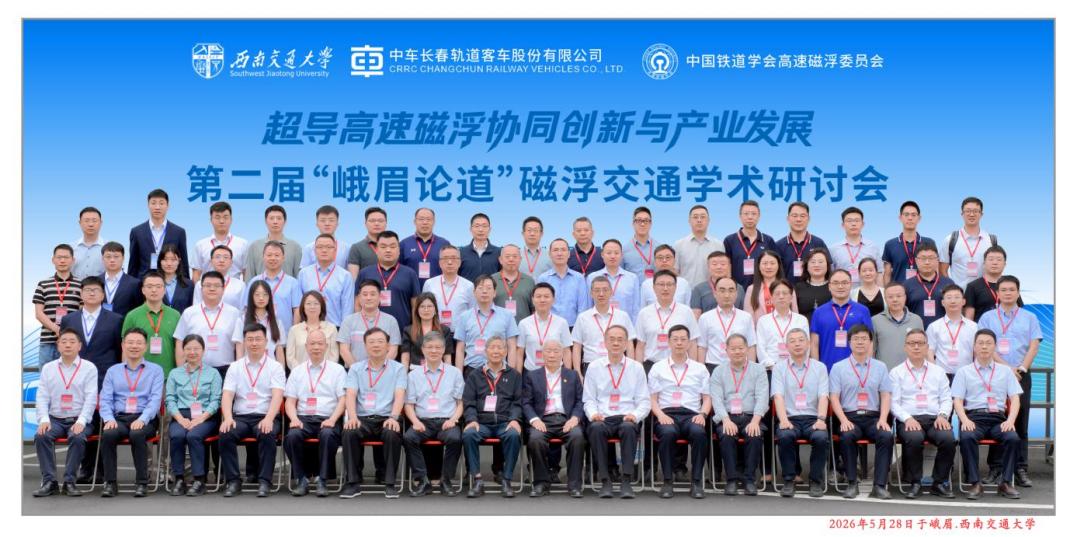
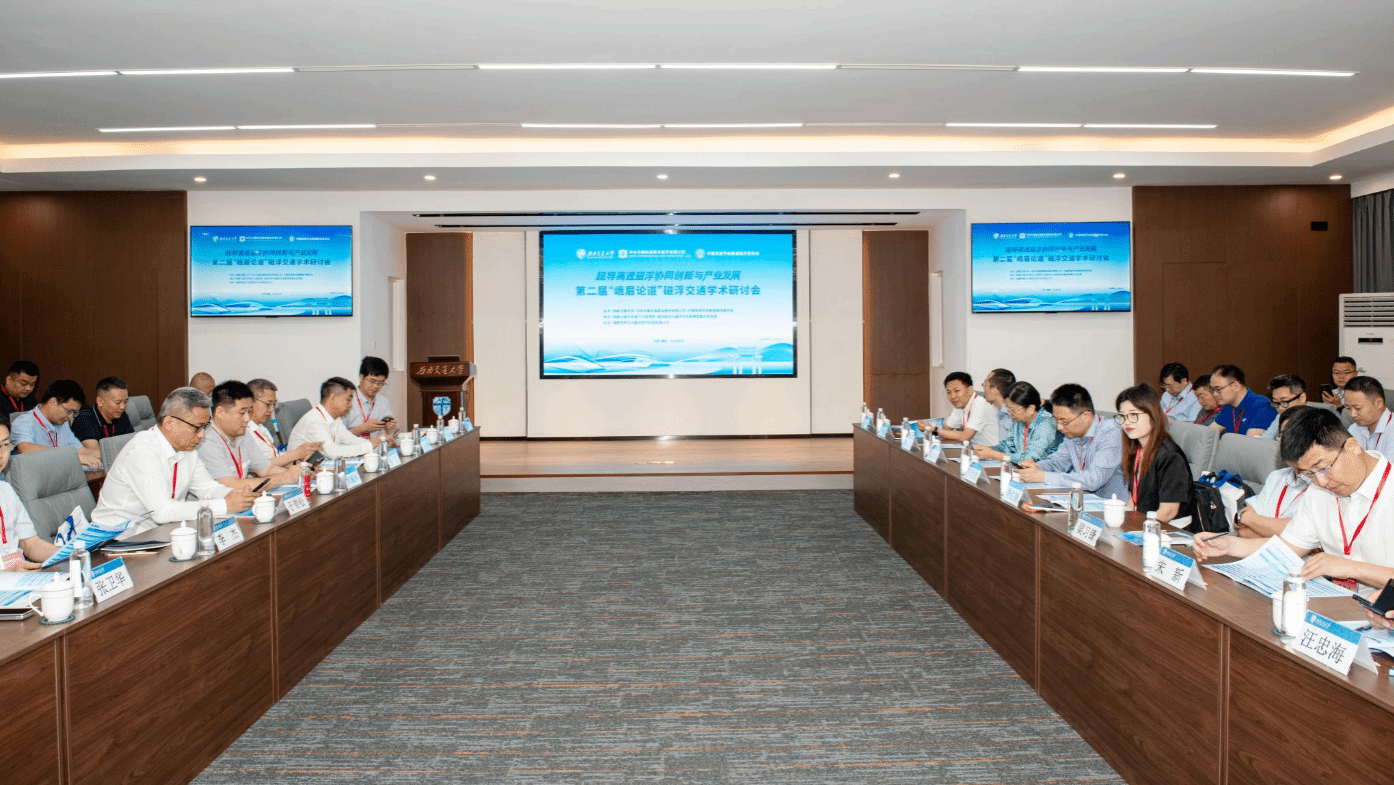
On May 28, the 2nd Emei Forum Academic Seminar on Maglev Transportation was held at the Emei Campus of Southwest Jiaotong University (SWJTU).
The event was attended by distinguished guests, including Mr. Yu Minming, Party Secretary of SWJTU, Prof. Shen Zhiyun, Academician of CAS & CAE, Prof. Qian Qingquan, Academician of the CAE, Mr.Sha Miao, General Manager of CRRC Changchun Railway Vehicles Co., Ltd. Mr. Li Wenxin, former Deputy General Manager of China State Railway Group Co., Ltd., and Director of the High-Speed Maglev Committee of the China Railway Society. The seminar was chaired by Prof. Wang Ping, Vice President of SWJTU.
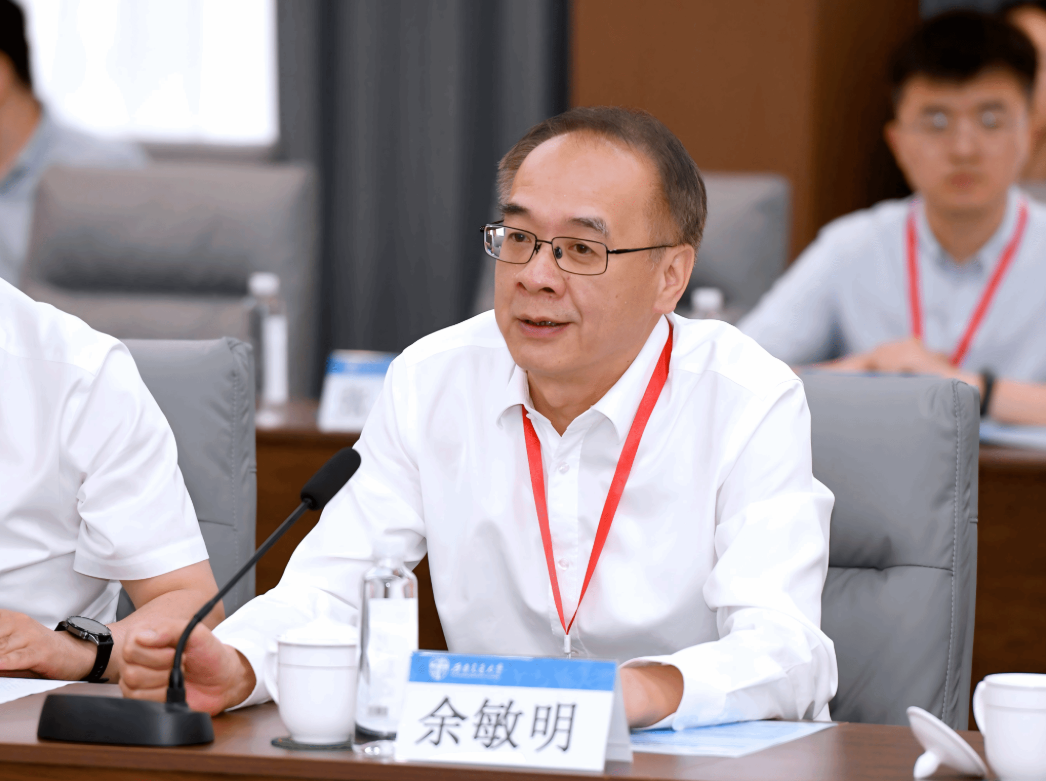
Mr. Yu Minming welcomed the leaders, experts, and scholars on behalf of the university. He emphasized that superconducting high-speed maglev technology is a key priority in building a strong transportation nation, essential for capturing the frontier of transport technology and cultivating new productive forces. He noted that SWJTU has deeply engaged in the maglev field for decades, establishing a high-level innovation platform and overcoming numerous core technical challenges. He pledged the university's continued collaboration with government, industry, and research entities to industrialize superconducting maglev.
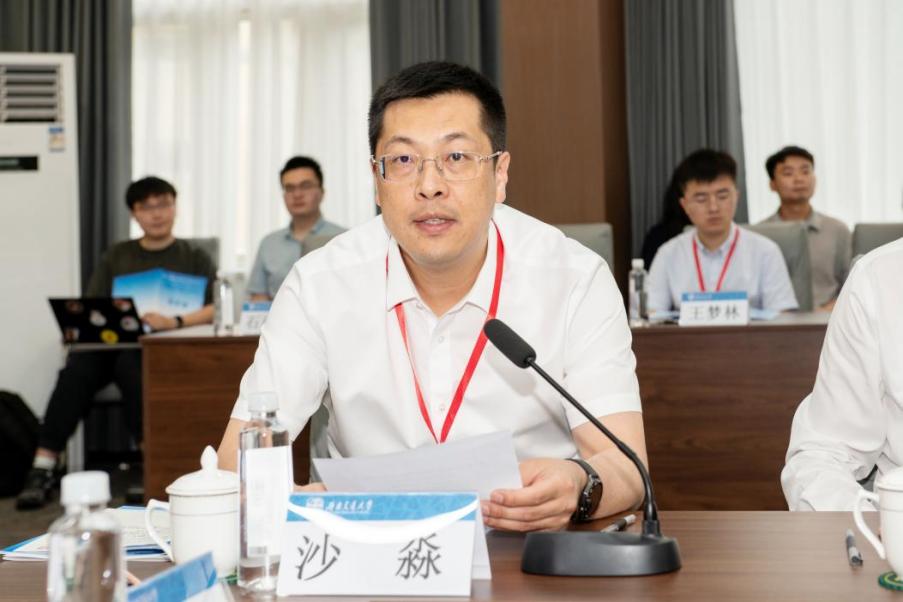
Mr. Sha Miao reviewed the extensive collaborative history between CRRC Changchun and SWJTU, tracing it back to the first domestic "Qingcheng Mountain" maglev train in 2001, through the localized 500 km/h normal-conducting high-speed maglev, and up to current iterations of superconducting electrodynamic maglev technologies. He stressed that while the prospects are broad, challenges remain in core technology maturity, engineering feasibility, and commercial operation. CRRC Changchun will leverage its manufacturing strengths to push maglev technology towards industrialization.
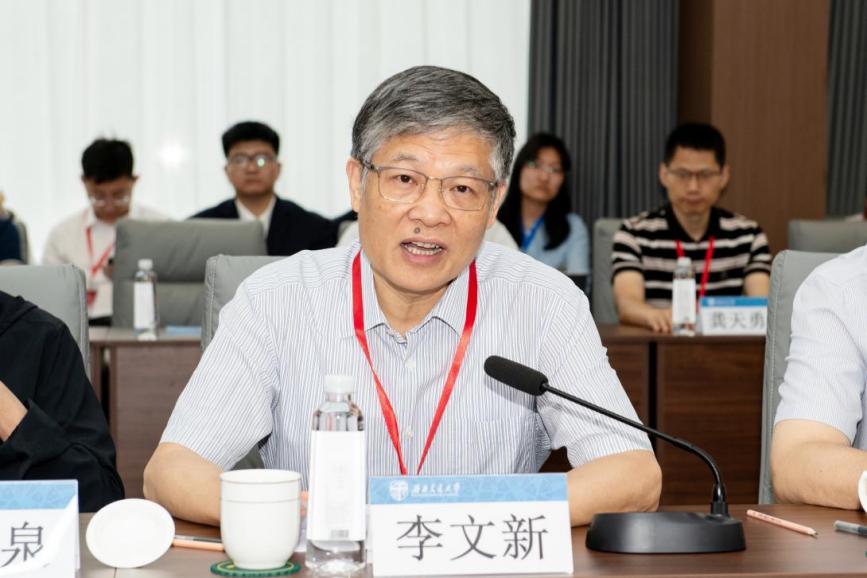
Mr. Li Wenxin noted that the "Emei Forum" has grown into a premier professional exchange platform for China's maglev industry. He offered three suggestions for future growth: focus on national strategic needs for whole-industry collaborative research; encourage diverse technologies and moderate competition for mutual improvement; and use platforms to gather resources, foster talent, and perfect standards, pushing maglev technology from the lab to real-world engineering.
A Special Tribute
The conference coincided with the 97th birthday of Academician Shen Zhiyun. On behalf of the assembly, Party Secretary Yu Minming presented flowers to extend heartfelt birthday congratulations.
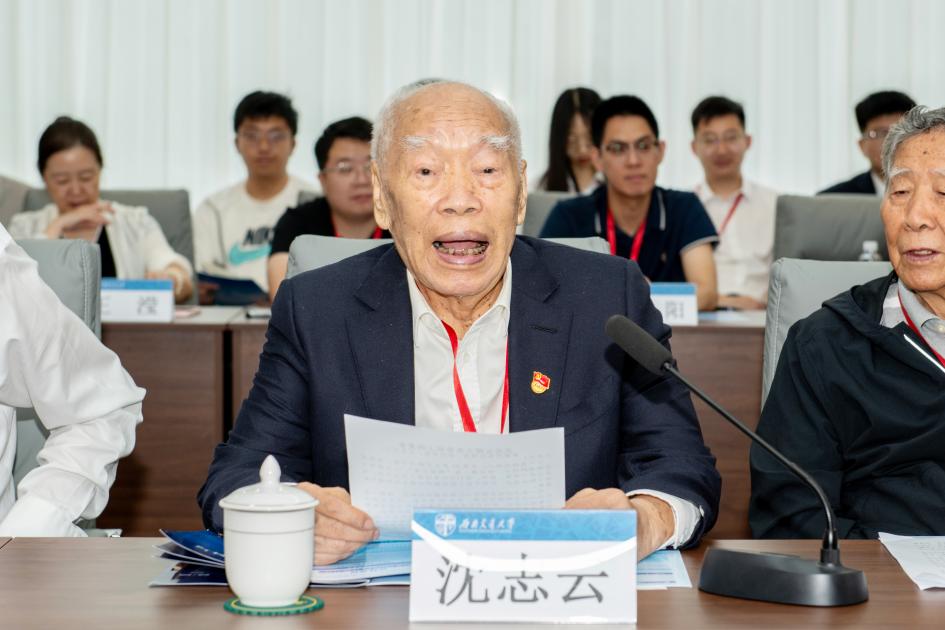
In a deeply moving address, Academician Shen reviewed his long-standing support for high-temperature superconducting (HTS) pinned maglev and vacuum tube high-speed transit. He praised the domestic industry's momentum and SWJTU's technological breakthroughs. He encouraged the field to build on its foundation of "wheel-rail leading the world" to rapidly achieve the goal of "superconducting leading the future."
Keynote Addresses
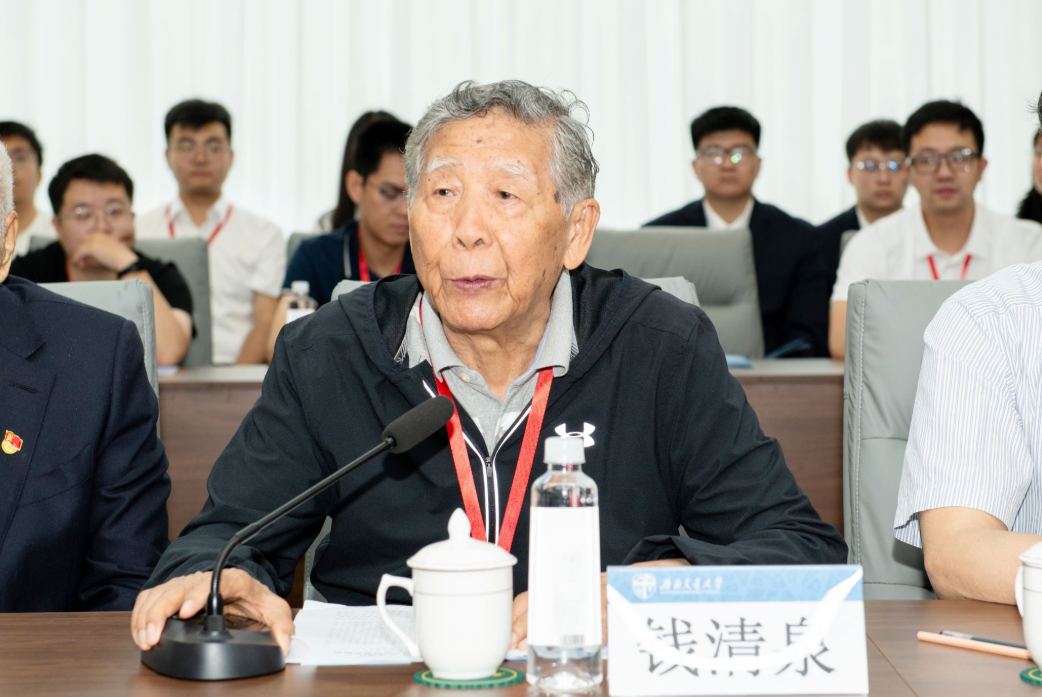
Academician Qian Qingquan discussed industry status and ecosystems, noting China's global leadership in high-speed maglev. He proposed a development strategy: "normal-conducting as the foundation, superconducting as the breakthrough, and pinned maglev as the lead." He advocated for three public platforms—joint experiments, data sharing, and standard development—to break down resource silos and secure international influence on maglev standards.
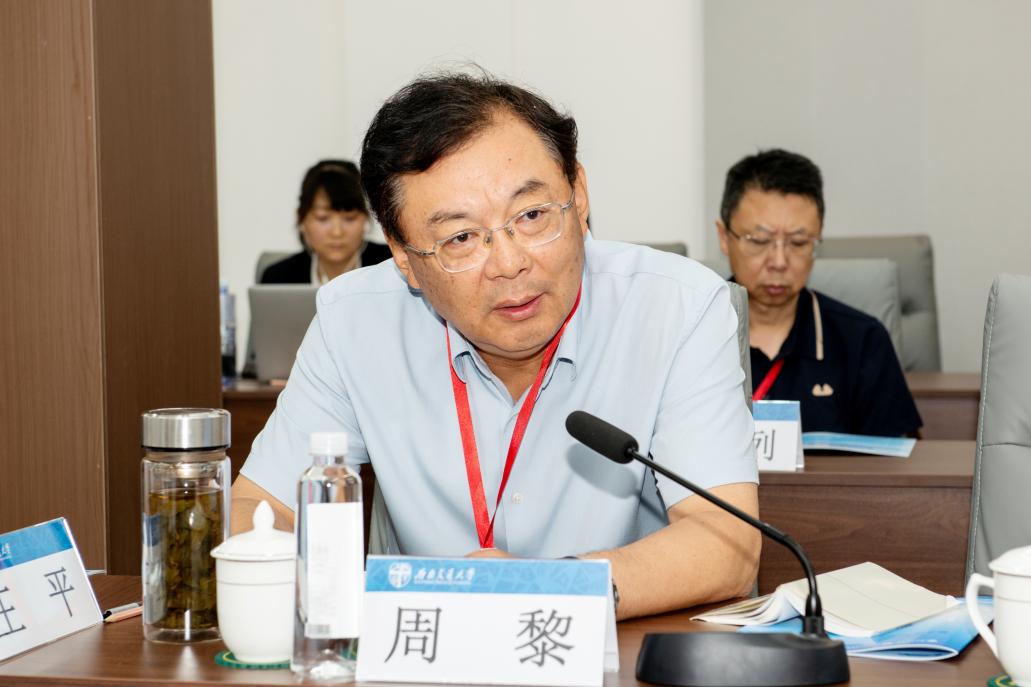
Mr. Zhou Li spoke on industry trends, explaining that maglev's development relies more on scientific research and market forces than the government-driven model of traditional high-speed rail. He recommended strict control over engineering standards and costs to build economically viable, replicable demonstration lines for large-scale adoption.
Forum Reports
The second phase, chaired by Mr. Wang Zhonghai, Deputy General Manager and Chief Engineer at CRRC Changchun, featured detailed technical reports:
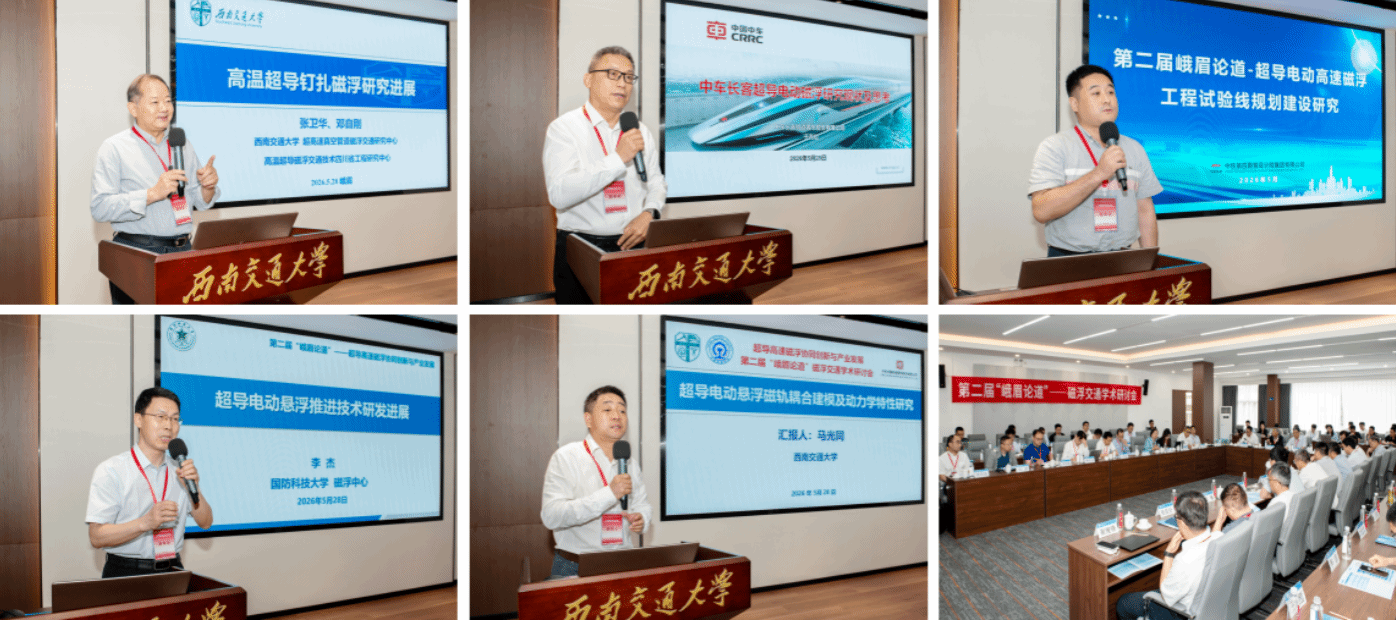
Prof. Zhang Weihua from SWJTU, discussed HTS pinned maglev innovations—like U-shaped track development and electromagnetic damping—that significantly boost suspension capacity and crosswind resistance. He also shared plans for supersonic verification.
Mr. Yu Qingsong from CRRC Changchun, outlined the R&D path and recent progress of superconducting electrodynamic maglev, reaffirming their commitment to engineering verification.
Mr. Mu Hanlin, from China Railway Siyuan Survey and Design Group, detailed infrastructure design solutions, proposing double-deck high-speed turnouts and fully enclosed noise-reduction structures.
Prof. Li Jie, from National University of Defense Technology, shared testing results on superconducting electrodynamic suspension propulsion under high-acceleration conditions and explored engineering challenges like liquid helium cost control and quench protection.
Prof. Ma Guangtong, Dean of School of Electrical Engineering, presented basic research on high-precision magnetic track coupling dynamic modeling, providing theoretical support for optimizing stability and safety across various interferences.
Thematic Salons & Conclusion
The afternoon featured two thematic salons focusing on "Basic Theory and Key Technologies" and "Engineering Applications and Supporting Industries." Experts from institutions like Shanghai Jiao Tong University, Central South University, Beijing Jiaotong University, and the China Academy of Railway Sciences tackled industry pain points from core materials to commercial operation models.
Co-hosted by SWJTU, CRRC Changchun, and the High-Speed Maglev Committee, the event drew over 100 experts. The seminar solidified industry consensus and charted a path to transition China's superconducting high-speed maglev from technological leadership to true industrial dominance.